
Backyard Biodiversity Explorers
A complete outdoor science curriculum for Years 3-6.
No excursions required.
Backyard Biodiversity Explorers turns your school grounds or backyard into a working field site. Over eight modules, students survey real invertebrates, map habitat layers, build food webs, and contribute to citizen science - all without leaving the grounds. Every lesson is ready to run, fully differentiated for Stage 2 and Stage 3, and aligned to Australian Curriculum v9.
Licences from $149 for a single class or homeschool family, $699 for full school access.
Licences and pricing.
Backyard Biodiversity Explorers is a digital licence. Download everything immediately after purchase - no shipping and waiting. Choose the option that fits your school or family below.
Founding School Offer:
The first 20 schools to licence Backyard Biodiversity Explorers receive founding school pricing of $499, a $200 saving on the standard school licence. Founding schools also get priority access to future programs and direct input into product development.
Contact us directly to discuss.
School Upgrade from Single Class:
Already running a single-class trial?
If you're ready to go school-wide, get in touch and we'll set up your upgrade for $550, with your trial payment already credited.
Want locally relevant species?
Our Brisbane and South East Queensland regional pack is available now for $39, with 25 local species profiles, a seasonal observation calendar, and a regional overview. More regions are on the way.
Full licence terms are available if you'd like the detail.
Questions about which licence is right for your school or family? Get in touch any time.
What’s included?
Backyard Biodiversity Explorers is a complete program - not just a random collection of worksheets. Everything your class needs, from the first lesson to the final investigation, is included in a single licence.
8 complete modules.
Each module includes a teacher guide, stage-differentiated student guide, and six worksheets - three for Stage 2, three for Stage 3.
Curriculum mapping.
Full AC v9 mapping document covering content codes and descriptions, so coordinators and curriculum leaders can see alignment at a glance.
60 species ID cards.
Full-colour identification cards covering six groups: plants, invertebrates, birds, fungi, reptiles, and mammals commonly found on Australian school grounds.
Student field notebook.
A journal students carry across all eight modules, building a personal record of their fieldwork from start to finish.
Teacher handbook.
Covers program setup, safety, assessment, differentiation, and homeschool guidance - everything in one place before you start.
Regional species packs.
Seven state and territory packs available as optional add-ons, featuring locally relevant species, seasonal calendars, and ecosystem overviews.
Take a peek inside:
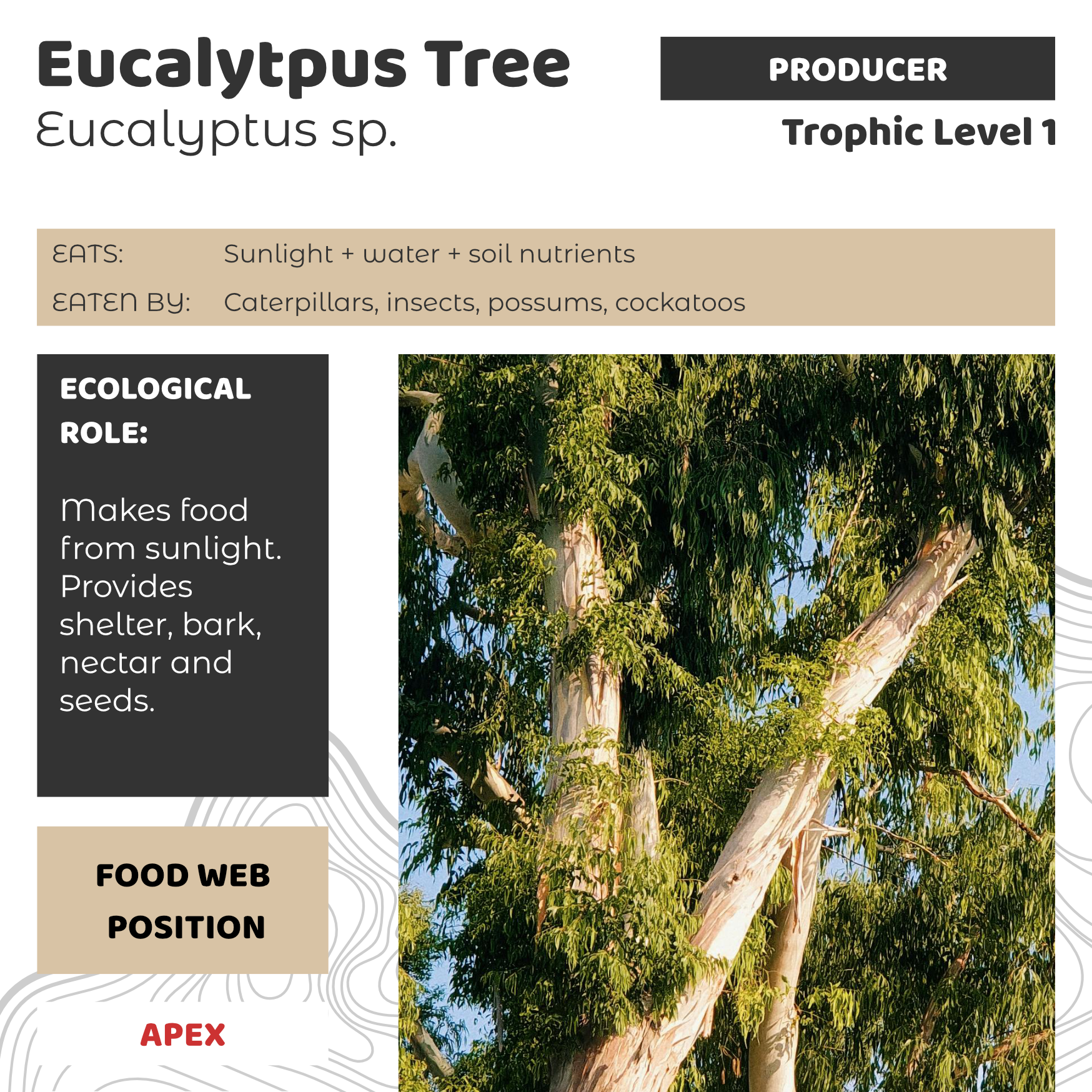
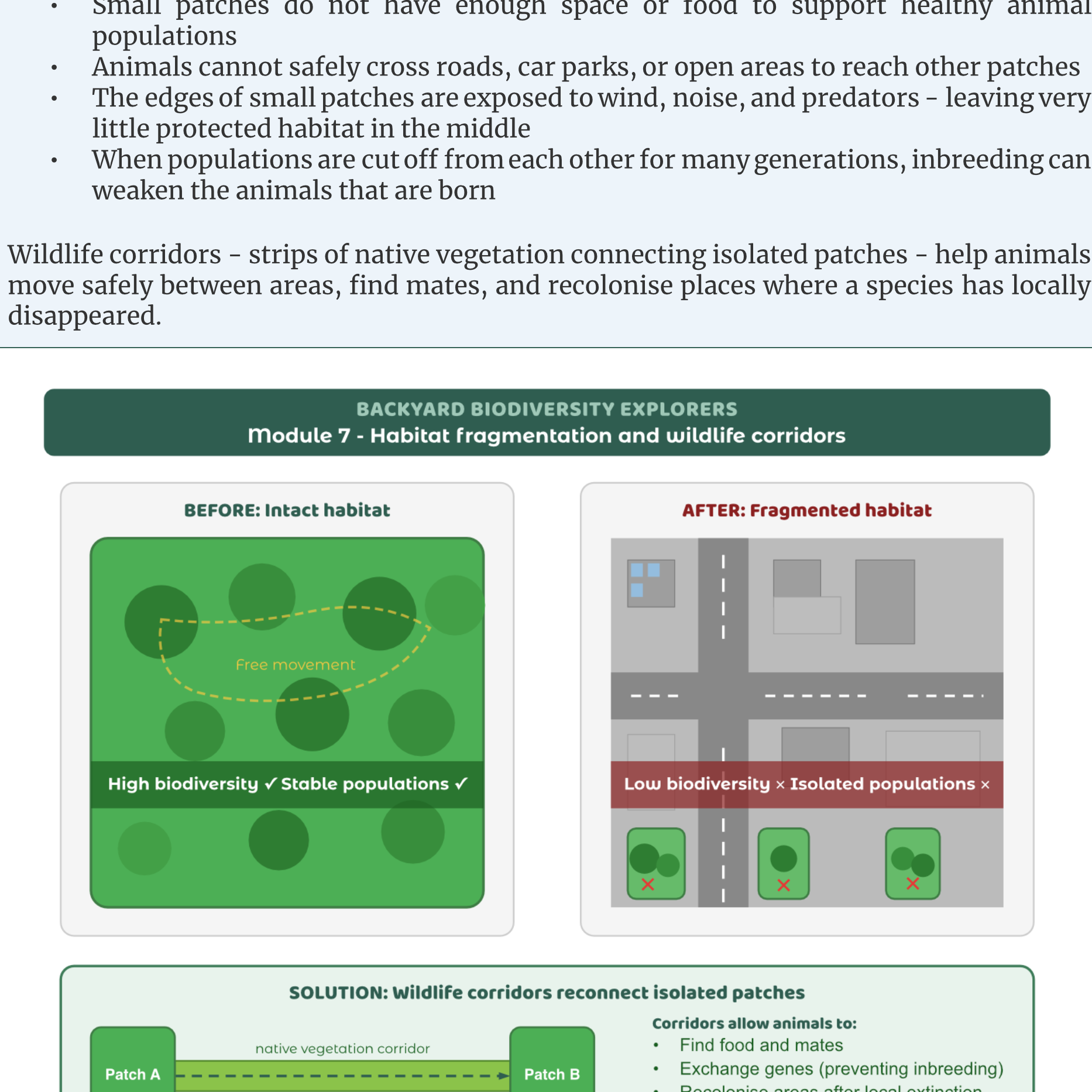
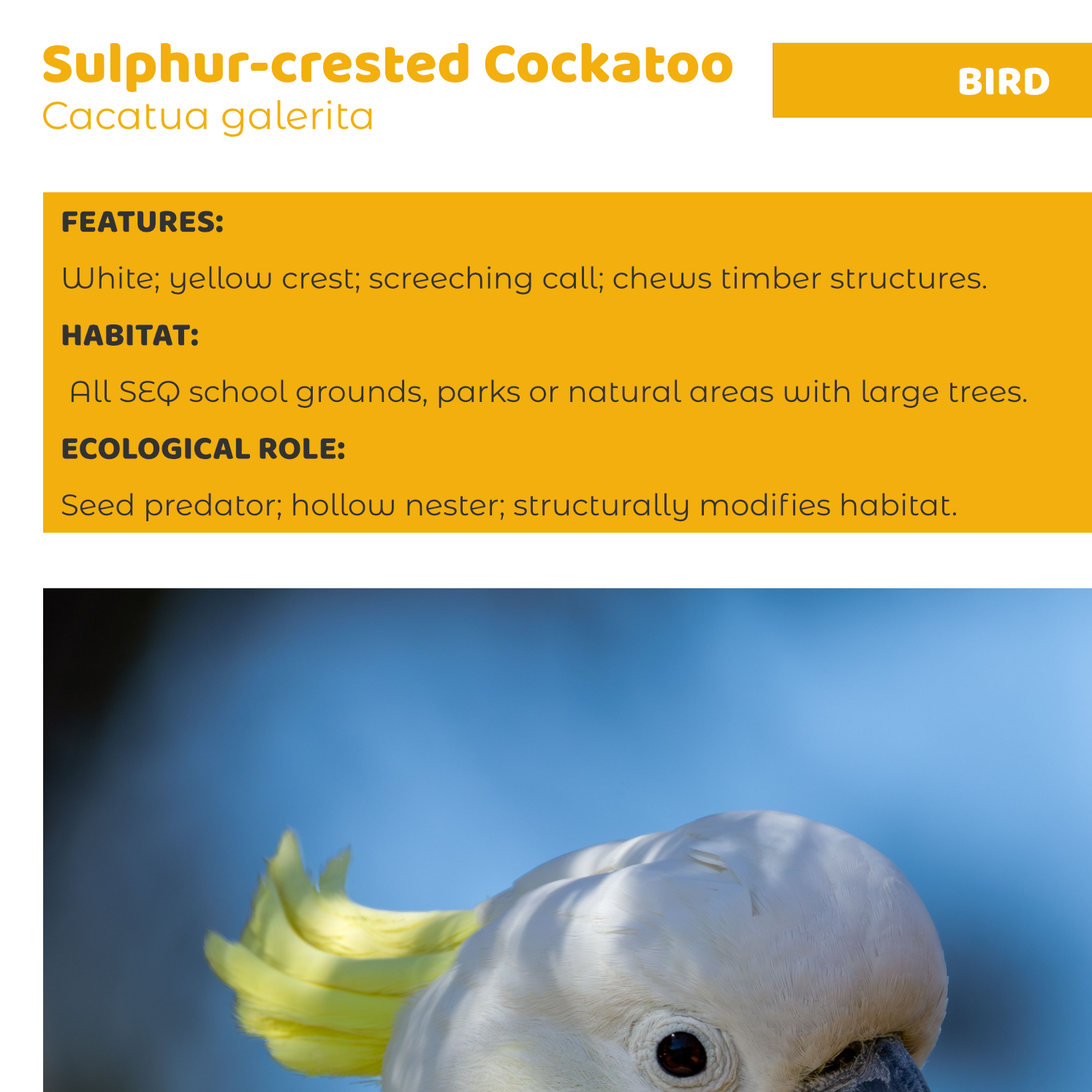
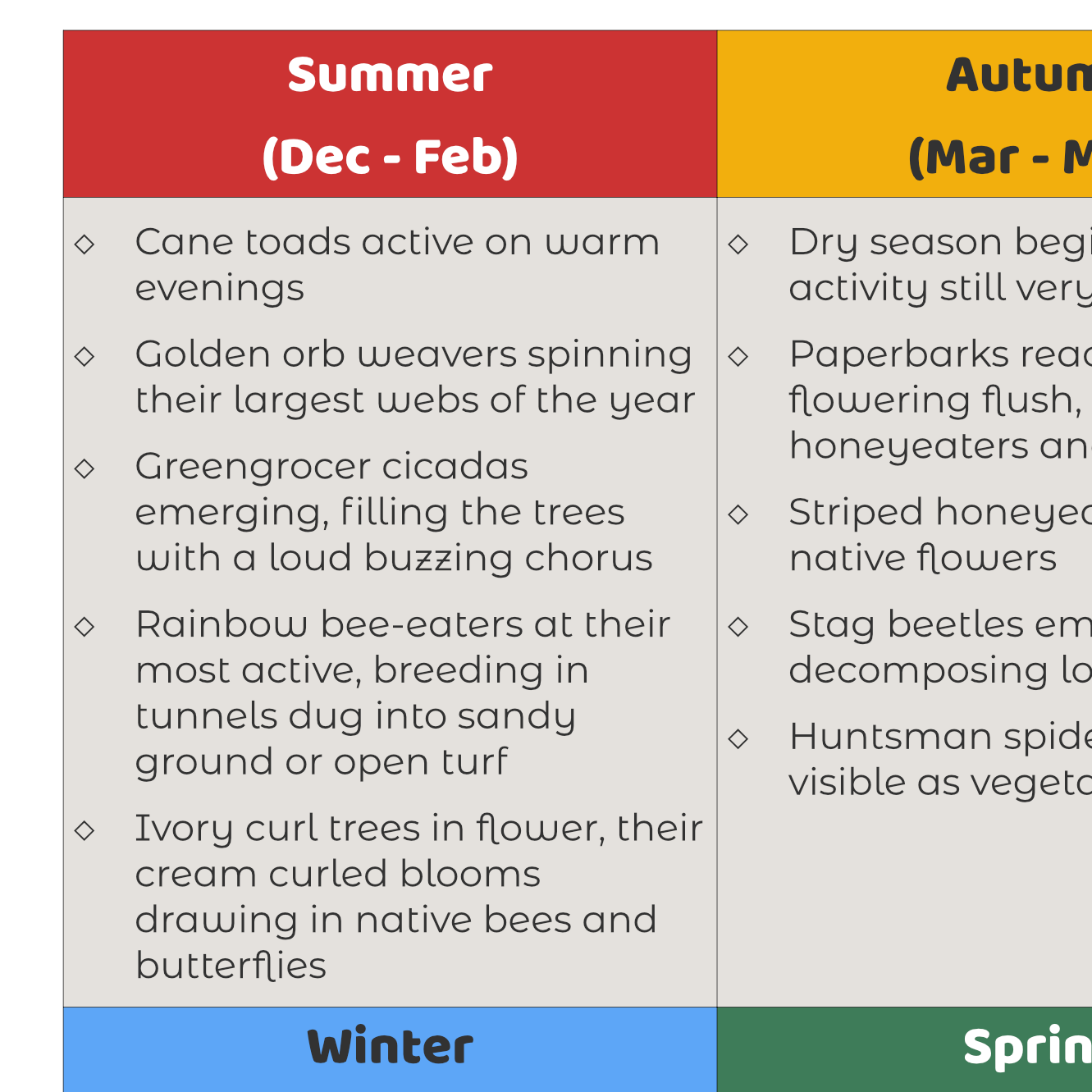
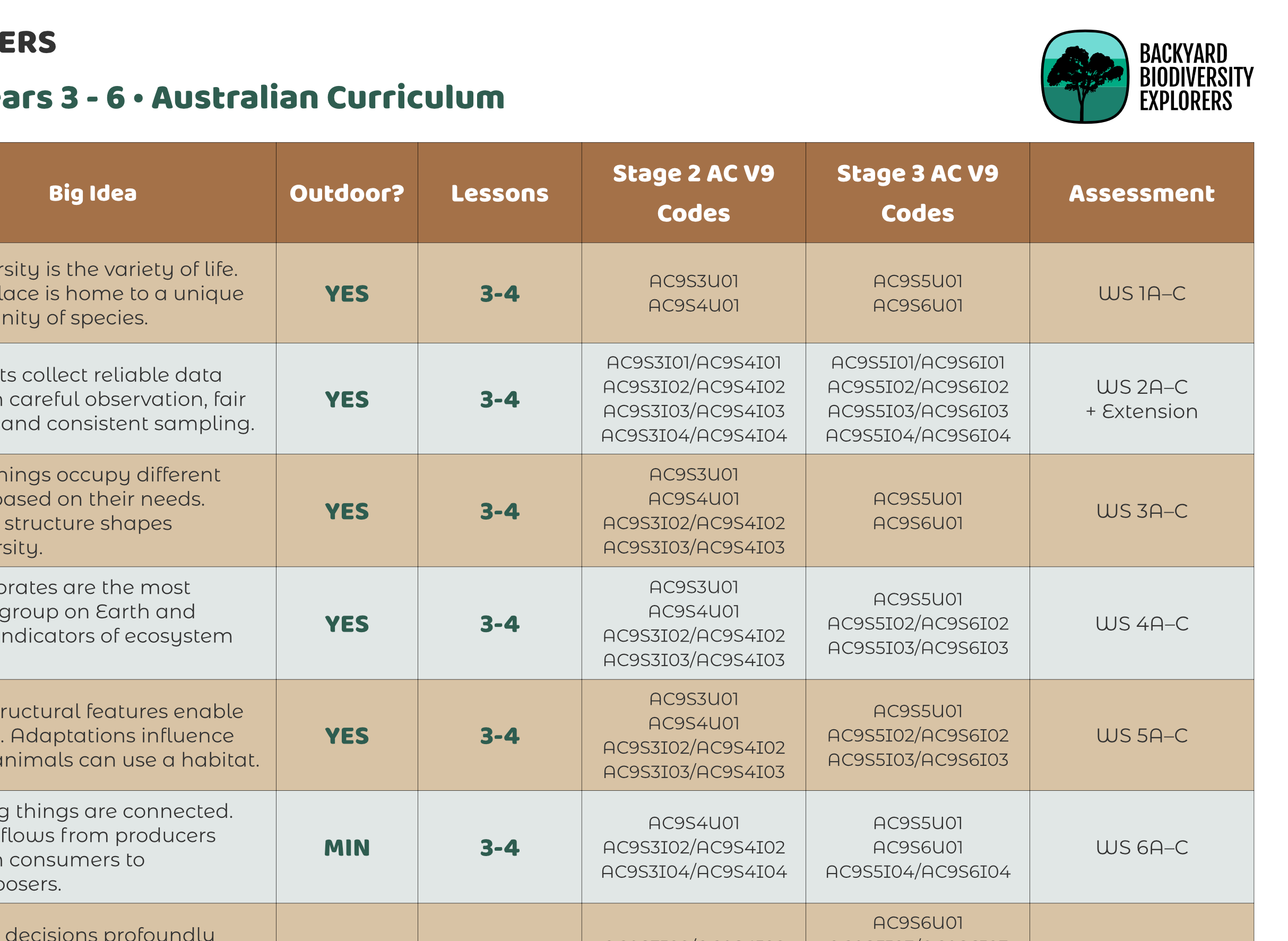
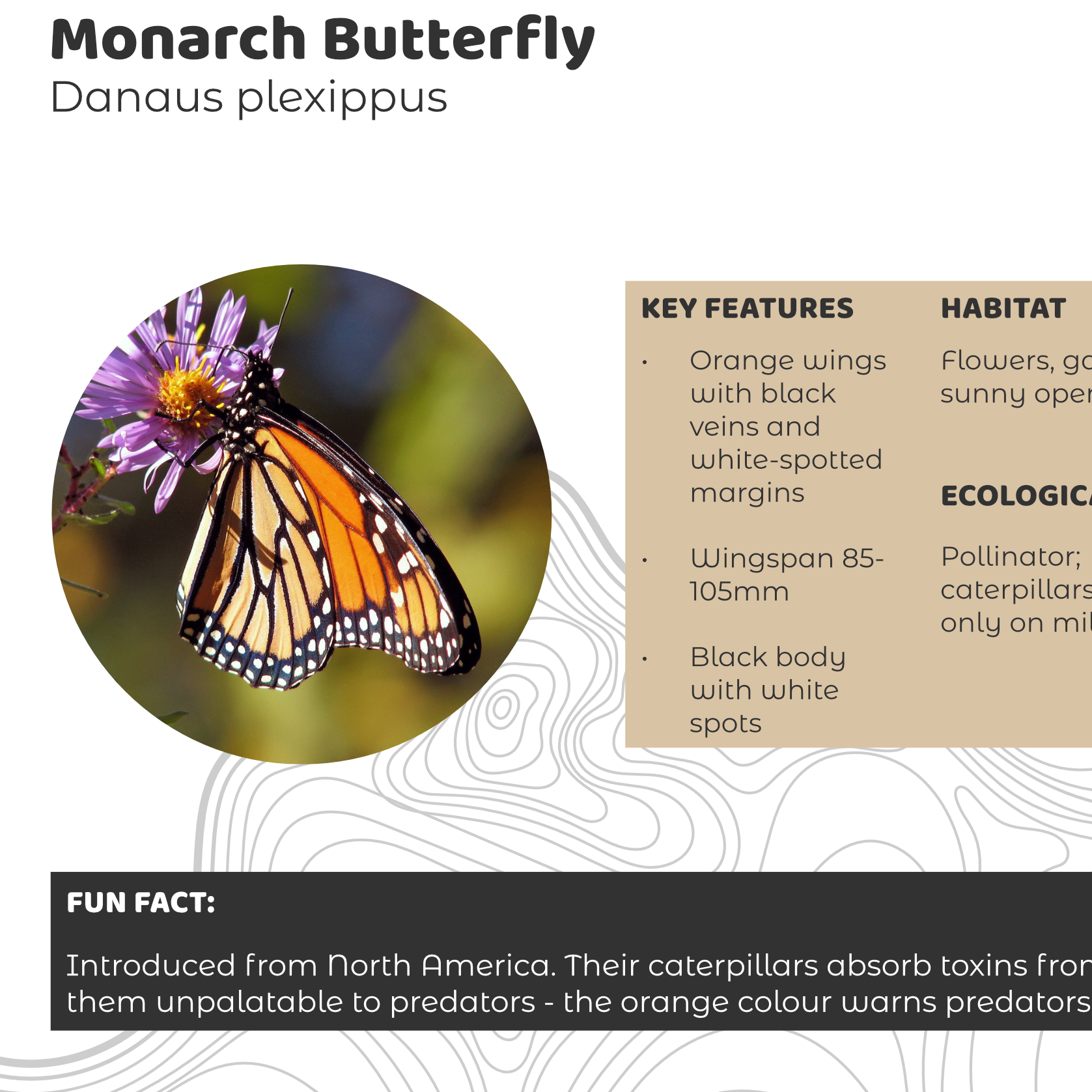
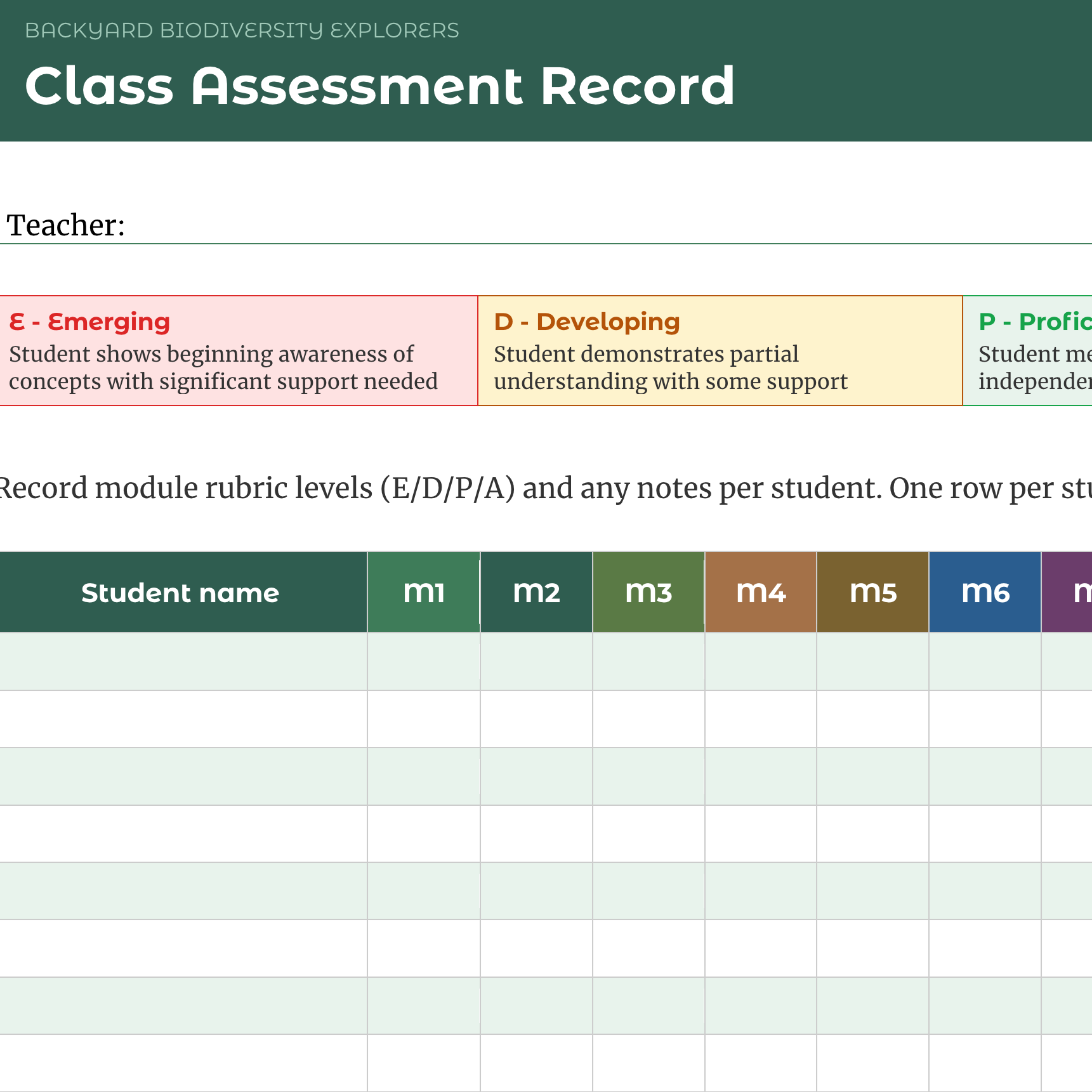
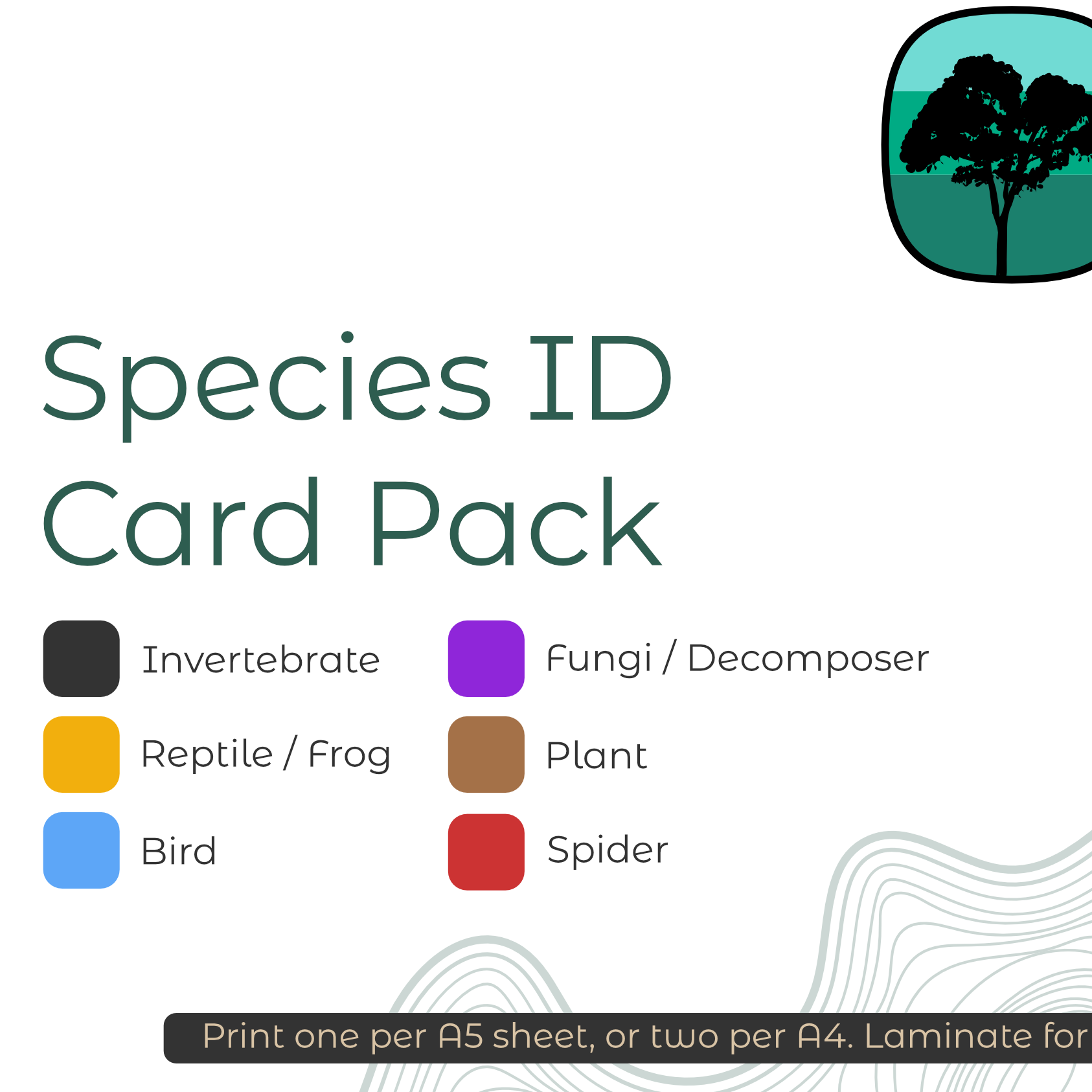
Eight modules. One complete program.
Each module runs across three 60-minute lessons and can be taught in any term. The program is designed to build across the year - but every module also works as a standalone unit.
-
Species, genetic and ecosystem diversity - and why losing any one type matters
-
Quadrats, sampling, variables, and what makes a fair test
-
How your school grounds are divided into layers - and who lives in each one
-
Classification, structural adaptations, and invertebrates as ecosystem health indicators
-
Plant parts, how adaptations work, and why native plants belong
-
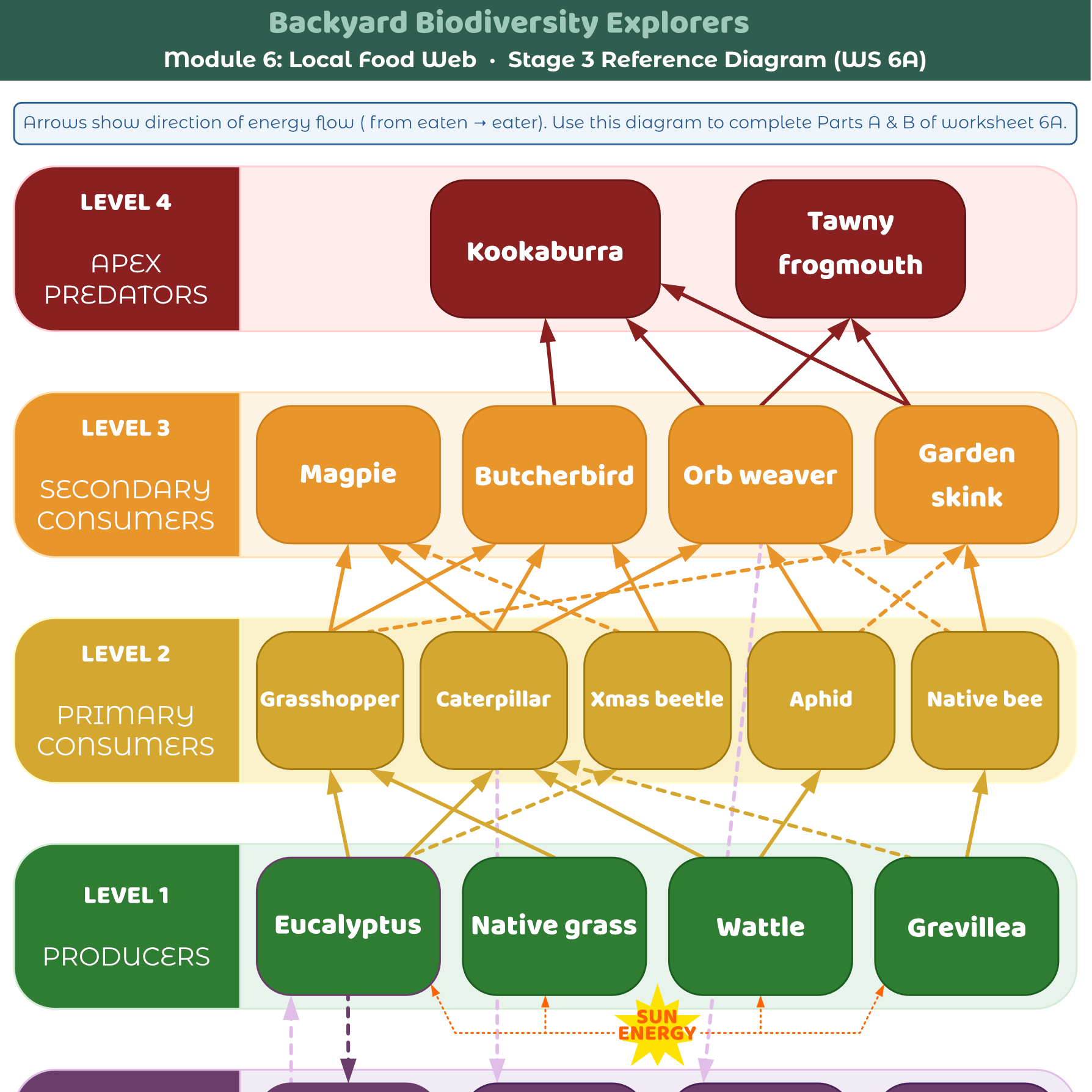
Trophic levels, keystone species, and what happens when one species disappears
-
Habitat fragmentation, wildlife corridors, and conservation strategies students can actually propose
-
A full scientific inquiry using real data, and a conservation action plan
Designed for busy schools or home-based learning.
Every module is fully differentiated for Stage 2 (Years 3-4) and Stage 3 (Years 5-6), and every module runs entirely on school grounds or in a backyard. No buses, no permission slips, no specialist sites, just what's already outside your door.
Both stages go outside together and collect the same data - differentiation happens in what students do with it back in the classroom. Stage 2 students observe, describe, and sort. Stage 3 students analyse, calculate, and evaluate. Same fieldwork. Different depth.
Stage 2 (Years 3-4):
Observing, describing, and sorting findings
Drawing simple food chains and ecosystem maps
Writing 3-4 sentence scientific responses
Hypothesis format: "I think that... because..."
Stage 3 (Years 5-6):
Analysing data and identifying patterns
Building food webs and calculating energy flow
Writing multi-paragraph explanations with evidence
Hypothesis format: "If... then... because..."
No excursions, no specialist equipment.
Students use basic materials and their own observations. Free digital apps are recommended in some instances, but only ever as a supplement, never a requirement.
Ready to run.
Every lesson includes a suggested teacher script, a list of materials, safety notes, and differentiation guidance. Experienced science teachers will find plenty of room to make it their own. First-timers can follow it step by step.
What teachers are saying.
We're currently working with our founding schools - feedback and reviews will appear here as the program rolls out. In the meantime, download the free preview to see the quality of Module 1 for yourself.
Not ready to commit? Download a free preview.
The free preview pack includes actual Module 1 content, including a teacher’s guide extract, the Stage 2 student guide, and a Stage 2 worksheet.
No email required, no strings attached.
Our flagship 8-module program.
Unlimited classes school-wide (single campus).